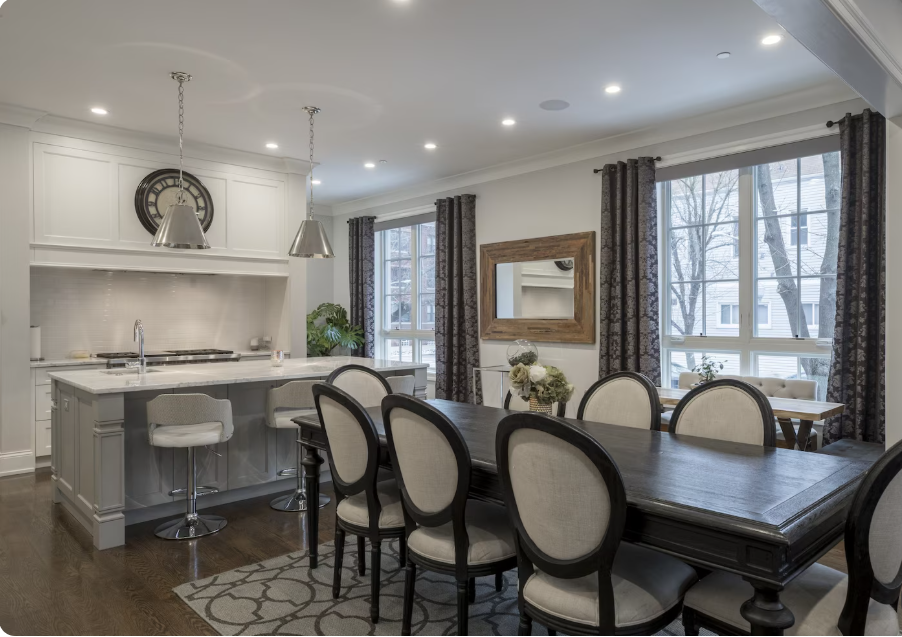
A well-designed office can improve employee comfort, support productivity, and create a positive impression on clients. However, outdated interiors, poor lighting, inefficient layouts, worn flooring, and insufficient meeting space can make everyday work more difficult. Hiring an experienced office renovation contractor helps businesses transform their workplaces into functional, attractive, and professional environments.
Whether you manage a small office, a growing startup, a corporate workspace, or a large commercial facility, office renovation requires careful planning. The project may involve interior design, partition installation, electrical upgrades, flooring, furniture, air conditioning, lighting, and other essential improvements.
A professional contractor helps coordinate these tasks, manage materials and labor, and work toward an agreed budget and timeline. The right team also considers safety, building requirements, and business operations throughout the renovation process.
This guide explains office renovation services, the benefits of hiring a professional contractor, cost considerations, planning tips, and how to choose the best renovation partner for your workplace.
What Does an Office Renovation Contractor Do?
An office renovation contractor manages or coordinates the work required to improve an existing office space. Depending on the project, the contractor may handle construction, interior finishing, technical upgrades, furniture installation, and final inspections.
Some contractors provide complete turnkey renovation services, while others specialize in particular areas, such as flooring, painting, electrical work, or office interiors.
Common office renovation services include:
- Office layout redesign and space planning
- Interior painting and wall finishing
- Flooring installation and replacement
- Glass and drywall partition installation
- False ceiling and lighting improvements
- Electrical wiring and power outlet upgrades
- Air conditioning and ventilation coordination
- Office furniture and workstation installation
- Reception and conference room remodeling
- Pantry and restroom improvements
- Networking and cable management
- Final inspection and project handover
Before hiring a contractor, determine whether you need a complete renovation or a smaller refurbishment. This will help you compare companies with the right experience and service capabilities.
Popular Office Renovation Services for Modern Workplaces
1. Office Layout and Space Planning
An effective office layout helps employees work comfortably while making good use of available space. Poorly arranged workstations, crowded walkways, and insufficient meeting areas can reduce functionality.
An office renovation contractor can coordinate layout changes based on employee numbers, department requirements, storage needs, and business operations.
For example, a growing company may need additional workstations, while a client-facing business may prioritize a professional reception area and private meeting rooms.
Good planning should consider:
- Employee movement and accessibility
- Workstation spacing and storage
- Meeting and collaboration areas
- Privacy and noise control
- Power outlets and data connections
- Future business growth
2. Office Flooring and Ceiling Upgrades
Flooring and ceilings have a major influence on the appearance and comfort of an office.
Popular flooring options include carpet tiles, vinyl, laminate, engineered flooring, and commercial-grade tiles. The right choice depends on traffic levels, maintenance requirements, budget, and the desired design.
Ceiling improvements may include suspended ceilings, acoustic panels, lighting integration, and access provisions for building services.
A qualified contractor should assess the existing floor and ceiling conditions before recommending materials.
3. Lighting and Electrical Improvements
Good lighting helps create a comfortable working environment. Outdated fixtures, poorly positioned lights, and insufficient power outlets can make an office less practical.
Renovation work may include LED lighting, task lighting, additional sockets, cable management, and electrical distribution improvements.
Any electrical modifications should be carried out by appropriately qualified professionals. The contractor should also assess power requirements for computers, printers, meeting room equipment, and other workplace devices.
4. Glass Partitions and Meeting Rooms

Glass partitions can help create private offices and meeting rooms while maintaining an open visual appearance.
Businesses may use clear glass for a modern look, frosted glass for additional privacy, or acoustic solutions where sound control is important.
The design should account for safety glazing, door hardware, accessibility, and the existing building layout. Glass partitions should be installed using suitable systems and according to applicable requirements.
5. Reception and Conference Room Remodeling
The reception area is often the first part of an office that clients and visitors see. A clean, well-organized entrance can strengthen the company’s professional image.
A renovation may include a new reception desk, improved lighting, updated finishes, seating, signage, and better visitor flow.
Conference rooms can also benefit from upgraded furniture, acoustic treatments, lighting, power outlets, and audiovisual equipment.
Benefits of Hiring a Professional Office Renovation Contractor
Improves Workplace Functionality
A well-planned renovation can make better use of available floor space. Improved layouts, organized storage, and properly positioned workstations can support smoother daily operations.
Creates a Professional Business Image
Updated interiors can help communicate professionalism to clients, visitors, and potential employees. Coordinated colors, modern furniture, quality finishes, and effective lighting can create a consistent visual identity.
Helps Manage Project Coordination
Office renovation often involves several trades working in sequence. A contractor can coordinate schedules, materials, installations, and site activities to reduce conflicts between different parts of the project.
Supports Employee Comfort
Comfortable workstations, suitable lighting, effective ventilation, and well-planned meeting spaces can contribute to a more pleasant working environment.
The results depend on the quality of the design, the existing building systems, and the needs of the employees.
Helps Identify Technical Problems
Renovation may reveal outdated wiring, damaged flooring, ventilation issues, or other hidden conditions. A professional contractor can identify problems within the agreed scope and recommend appropriate specialists where necessary.
Can Reduce Avoidable Delays
Clear planning, realistic schedules, and timely material selection can help reduce unnecessary interruptions. However, unexpected site conditions and material availability can still affect the completion date.
How to Choose the Best Office Renovation Contractor
Selecting the right contractor is one of the most important steps in a successful renovation project.
Check Commercial Renovation Experience
Office projects have different requirements from residential remodeling. They may involve business equipment, network connections, access controls, building management rules, and work around occupied spaces.
Ask potential contractors for examples of office projects similar in size and complexity to yours.
Review References and Previous Work
Look at completed projects and ask previous clients about communication, workmanship, budget management, and schedule performance.
Photographs can be helpful, but references may provide a clearer understanding of how the contractor manages challenges during construction.
Request a Detailed Scope of Work
The proposal should specify the work included, materials, quantities, labor, installation responsibilities, and exclusions.
For more complex projects, request an itemized bill of quantities or equivalent cost breakdown. This helps you compare proposals on a consistent basis.
Confirm Technical Coordination
Office renovation may involve electrical systems, air conditioning, plumbing, networking, lighting, and fire-safety interfaces.
Ask how the contractor will coordinate these systems and whether specialist subcontractors will be involved. Confirm who is responsible for approvals, inspections, and testing.
Understand the Project Schedule
Request a schedule that identifies major phases, material delivery dates, working hours, and expected completion.
If employees will continue working during the renovation, ask how the contractor will manage noise, dust, safe access, and temporary service interruptions.
Check Insurance and Contract Terms

Verify the contractor’s applicable licenses, insurance, and safety procedures. Read the contract carefully and confirm how changes, delays, payments, and warranties will be handled.
A written agreement should make responsibilities clear before work begins.
Office Renovation Costs: What Should You Budget?
Office renovation costs vary according to the project’s size, location, design, materials, technical requirements, and existing conditions. A simple cosmetic update will usually have a different budget from a full refurbishment involving new partitions, flooring, furniture, electrical work, and air conditioning.
The following table outlines the main cost categories to consider.
| Renovation component | What affects the cost | Budget consideration |
|---|---|---|
| Painting and wall finishes | Surface area, preparation, finish quality | Repair damaged surfaces first |
| Flooring | Material, floor condition, installation | Include removal of existing flooring |
| Partitions | Glass or drywall type, doors, acoustic needs | Confirm privacy and safety requirements |
| Electrical work | Wiring, sockets, lighting, power demand | Assess existing electrical capacity |
| Ceiling work | Ceiling design, access, lighting integration | Coordinate with building services |
| Furniture and workstations | Quantity, materials, customization | Consider reusing suitable existing furniture |
| HVAC and ventilation | Equipment, duct changes, cooling requirements | Confirm compatibility with the new layout |
| Project management | Scope, complexity, duration | Clarify what coordination services are included |
Factors That Influence the Final Price
- Office size: Larger spaces generally require more materials and labor.
- Renovation scope: Cosmetic improvements usually involve fewer trades than a complete redesign.
- Material selection: Custom furniture and premium finishes can increase costs.
- Existing conditions: Hidden damage or outdated systems may require additional work.
- Business occupancy: Working around employees may require phased construction or after-hours labor.
- Technology requirements: Networking, access control, audiovisual systems, and specialized equipment can add to the budget.
- Permits and approvals: Requirements depend on the building and the nature of the renovation.
How to Keep Office Renovation Costs Under Control
Start by defining your priorities and separating essential work from optional upgrades. Obtain comparable written estimates and review the material specifications carefully.
Consider retaining existing furniture or fixtures when they remain safe, functional, and compatible with the new layout. Plan technical changes early so that power, networking, and air conditioning requirements are not discovered after finishing work begins.
It is also sensible to maintain a contingency allowance for unexpected conditions. The appropriate amount depends on the building’s condition and the project’s complexity.
How to Renovate an Office Without Disrupting Business Operations
For many companies, closing the office during renovation is impractical. A phased approach may allow some employees to continue working while other areas are renovated.
Divide the Office Into Work Zones
The contractor can plan the project in stages, completing one area before moving to another. This may help maintain access to essential workstations and meeting rooms.
Schedule Noisy Work Carefully
Demolition, drilling, and other disruptive activities can be scheduled outside peak working hours where feasible and permitted.
Protect Employees and Equipment
Use suitable barriers, dust-control methods, signage, and safe access routes. Protect computers, furniture, documents, and other equipment from construction dust and accidental damage.
Communicate Changes in Advance
Inform employees about temporary seating arrangements, access restrictions, planned shutdowns, and expected noise. Clear communication can reduce confusion and help teams prepare.
Coordinate Building Services
Electrical, networking, plumbing, and air conditioning work should be scheduled carefully to minimize interruptions. Any required shutdowns should be communicated and approved in advance.
Common Office Renovation Mistakes to Avoid
Avoiding common planning errors can help protect your budget and improve the finished result.
- Starting work without a clearly defined scope
- Choosing a contractor based only on the lowest price
- Ignoring electrical, networking, or ventilation requirements
- Ordering materials before confirming measurements
- Underestimating the time required for approvals
- Failing to plan for employees during construction
- Making frequent design changes after work begins
- Overlooking final testing, snagging, and handover documentation
A well-organized planning phase can help identify these risks before they affect the schedule.
Office Renovation Checklist Before Project Handover

Before accepting the completed office, review the work with the contractor and confirm that the agreed scope has been delivered.
Your checklist should include:
- Inspecting walls, ceilings, flooring, doors, and finishes
- Testing lighting, switches, and electrical outlets
- Checking window and door operation
- Confirming that furniture and workstations are installed correctly
- Testing relevant air conditioning and ventilation systems
- Verifying networking and other specified equipment
- Reviewing outstanding defects and completion dates
- Collecting applicable warranties and operating instructions
- Confirming that debris and unused materials have been removed
A documented handover helps ensure that remaining issues are identified and assigned for resolution.
Conclusion
Hiring a professional office renovation contractor can help businesses create a more functional, attractive, and comfortable workplace. From space planning and flooring to electrical upgrades, partitions, lighting, and furniture installation, the right contractor coordinates the details needed to complete a successful renovation.
Before choosing a company, review its commercial experience, compare detailed estimates, confirm technical capabilities, and agree on a realistic schedule. If the office must remain operational, discuss phased construction and employee safety before work begins.
With careful planning and clear communication, an office renovation can improve the daily working environment while supporting the long-term needs of the business.
Frequently Asked Questions (FAQs)
1. What does an office renovation contractor do?
An office renovation contractor manages or coordinates improvements such as flooring, painting, partitions, ceilings, lighting, electrical work, furniture installation, and other interior upgrades. The exact services depend on the contractor and project scope.
2. How much does an office renovation cost?
Costs depend on office size, materials, the extent of construction, technical upgrades, and existing building conditions. Request an itemized estimate based on an inspection and a clearly defined scope of work.
3. How long does an office renovation take?
The timeline depends on the office size, project complexity, material availability, approvals, and whether the office remains occupied. Ask the contractor for a schedule covering design decisions, procurement, construction, and handover.
4. Can an office be renovated while employees continue working?
Yes, in many cases. A phased renovation can allow employees to work in unaffected areas, but it requires careful planning for dust, noise, safe access, and interruptions to building services.
5. How do I choose the best office renovation contractor?
Review relevant commercial experience, references, insurance, technical coordination capabilities, written estimates, and warranty terms. Choose a contractor who explains the scope clearly and provides a realistic plan for managing cost, quality, and timing.